


- ASIAN COOKING
- CLEANING - HYGIENE
- CLEANING PRODUCTS DIAMOND
- COFFEE - TEA - VIENNESE PASTRIES - JUICES - MILK SHAKE
- AUTOMATIC COFFEE MILL GRINDER LINE
- AUTOMATIC ORANGE JUICER
- BAR COOL TABLES GLASS DOOR
- BAR COOLED TABLES FULL DOOR
- BAR ICE CUBE MAKERS NORDICA LINE
- BAR MICROWAVES
- BOILER
- CHOCOLATE HEATERS
- COFFE PERCOLATING MACHINES
- COLD DRINK DISPENCER BLACK LINE
- ESPRESSO COFFEE MACHINE AROMA LINE AUTOMATIC
- ESPRESSO COFFEE MACHINE COMPACT LINE AUTOMATIC
- ESPRESSO COFFEE MACHINE COMPACT LINE SEMI AUTOMATIC
- EXTRACTOR JUICE LINE
- FILTER COFFEE MACHINE
- GRANITA & SORBET MACHINE FABY LINE
- GRANITA MACHINE DISPENSER CAR LINE
- HEATED CARROUSEL FOR CUPS
- HIGH SPEED OVENS iPRONTI
- HOT CHOCOLATE DISPENCER
- ICE CRUSHERS
- JUICERS ACID
- MIXER BARMAN BEVERAGE LINE
- MIXER BARMAN BLACK LINE
- MIXER BARMAN MAGNUM LINE
- MIXER FRAPPE
- PANCAKER
- STAINLESS STEEL WATER SOFTENER
- WAFFLE IRON
- COMBI OVENS AND COOK & CHILL
- ACCESSORIES FOR ELECTRIC AND GAS COMBI OVENS
- BANQUET TROLLEYS AND ACCESSORIES
- BLAST CHILLERS AND FREEZERS COOK & CHILL
- COMBI OVEN HOODS
- COMBI OVEN STANDS AND CABINETS
- CONNECTING KIT FOR COMBI OVENS
- ELECTRIC COMBI OVENS – DIRECT STEAM
- ELECTRIC COMBI OVENS WITH STEAM BOILER
- ELECTRIC OVENS COMBI LINE EVO
- ELECTRIC OVENS COMBI LINE PLUS EVO
- ELECTRIC OVENS COMBI SMART LINE EVO
- GAS COMBI OVENS – DIRECT STEAM
- GAS COMBI OVENS WITH STEAM BOILER
- HEATED HOLDING TROLLEYS
- HEATED HOLDING TROLLEYS WITH HUMIDITY CONTROL
- REFRIGERATED HOLDING TROLLEYS
- REGENERATION OVENS COMBI LINE
- TROLLEYS AND TRAY RACKS
- CONVECTION OVENS – HIGH SPEED OVENS – MICROWAVE OVENS – CHARCOAL OVENS
- COOKING
- ELECTRIC LOW RANGE
- GAS LOW STOVES
- GAS TABLE RANGE
- INDUCTION PLATES/ TABLE-TOP
- RANGE ALPHA 650
- ACCESSORIES ALHA 650
- ELECTRIC BAIN-MARIE ALPHA 650
- ELECTRIC COOKING PLATES ALPHA 650
- ELECTRIC COOKING RANGE ALPHA 650
- ELECTRIC FRYERS ALPHA 650
- ELECTRIC PASTA COOKER ALPHA 650
- ELECTRIC RANGE TOP ALPHA 650
- ELECTRIC SALT BASIN ALPHA 650
- ELECTRIC TILTING BRAD PAN ALPHA 650
- ELECTRIC VITROCERAMIC STOVES ALPHA 650
- GAS COOKING PLATES ALPHA 650
- GAS COOKING RANGE ALPHA 650
- GAS FRYERS TOP ALPHA 650
- GAS RANGE TOP ALPHA 650
- LAVA STONE GRILL GAS ALPHA 650
- NEUTRAL ELEMENTS ALPHA 650
- SINK ALPHA 650
- STEAM GRILL GAS ALPHA 650
- UNDERCARRIAGE ALPHA 650
- RANGE DROP IN SHOW COOKING
- RANGE MAXIMA 700+
- ACCESSORIES MAXIMA 700+
- AUTOM. RELIFT OF THE BASKETS MAXIMA 700+
- ELECTRIC BAIN MARIE MAXIMA 700+
- ELECTRIC BOILING PAN MAXIMA 700+
- ELECTRIC COOKING PLATES MAXIMA 700+
- ELECTRIC COOKING RANGE MAXIMA 700+
- ELECTRIC FRYERS MAXIMA 700+
- ELECTRIC FRYING PAN RANGE MAXIMA 700+
- ELECTRIC GRILLS HIGH POWER MAXIMA 700+
- ELECTRIC PASTA COOKER MAXIMA 700+
- ELECTRIC SALT BASIN MEDIUM 700+
- ELECTRIC TILTING BRAD PAN MAXIMA 700+
- ELECTROCERAMIC COOKERS RANGE MAXIMA 700+
- ELEKTRIC COOKING HUB MAXIMA 700+
- GAS BOILING PAN RANGE MAXIMA 700+
- GAS COOKING PLATES MAXIMA 700+
- GAS COOKING RANGE MAXIMA 700+
- GAS FRYERS RANGE MAXIMA 700+
- GAS FRYING PAN RANGE MAXIMA 700+
- GAS GRILLS HIGH POWER MAXIMA 700+
- GAS LAVA STONES GRILL RANGE MAXIMA 700+
- GAS PASTA COOKER RANGE MAXIMA 700+
- GAS STOVES & ELECTRIC OVENS RANGE MAXIMA 700+
- GAS TILTING BRAD PAN RANGE MAXIMA 700+
- INDUCTION COOKING RANGE MAXIMA 700+
- NEUTRAL ELEMENTS MAXIMA 700+
- UNDERCARRIAGE RANGE MAXIMA 700+
- RANGE MAXIMA 900+
- ACCESSORIES MAXIMA 900+
- AUTOMATIC RELIFT OF THE BASKETS TRIPLE MAXIMA 900+
- ELECTRIC BAIN-MARIE MAXIMA 900+
- ELECTRIC BOILING PAN MAXIMA 900+
- ELECTRIC COOKING RANGE MAXIMA 900+
- ELECTRIC FRYERS "DIGIT" MAXIMA 900+
- ELECTRIC FRYERS MAXIMA 900+
- ELECTRIC GRILLS HIGH POWER MAXIMA 900+
- ELECTRIC GRILPLATE MAXIMA 900+
- ELECTRIC PASTA COOKER MAXIMA 900+
- ELECTRIC SALT BASIN MAXIMA 900+
- ELECTRIC TILTING BRAD PAN MAXIMA 900+
- ELECTRIC VITROCERAMIC STOVES MAXIMA 900+
- GAS BAIN-MARIE MAXIMA 900+
- GAS BOILING PAN MAXIMA 900+
- GAS COOKING RANGE MAXIMA 900+
- GAS FRYERS DIGITAL MAXIMA 900+
- GAS FRYERS MAXIMA 900+
- GAS GRILLS HIGH POWER MAXIMA 900+
- GAS GRILPLATES MAXIMA 900+
- GAS PASTA COOKER MAXIMA 900+
- GAS TILTING BRAD PAN MAXIMA 900+
- INDUCTION COOKING RANGE MAXIMA 900+
- NEUTRAL ELEMENTS MAXIMA 900+
- REFRIGERATED UNDERCARRIAGE MAXIMA 900+
- UNDERCARRIAGE MAXIMA 900+
- RANGE OPTIMA 700 EVO
- ACCESSORIES OPTIMA 700 EVO
- BASES OPTIMA 700 EVO
- COOKERS WITH ELECTRIC COOKING HOB OPTIMA 700 EVO
- ELECTRIC BAIN-MARIE OPTIMA 700 EVO
- ELECTRIC BOILING PAN OPTIMA 700 EVO
- ELECTRIC COOKING PLATES OPTIMA 700 EVO
- ELECTRIC COOKING RANGE OPTIMA 700 EVO
- ELECTRIC FRYERS OPTIMA 700 EVO
- ELECTRIC PASTA COOKER OPTIMA 700 EVO
- ELECTRIC SALT BASIN OPTIMA 700 EVO
- ELECTRIC STEAM GRILLS OPTIMA 700 EVO
- ELECTRIC STOVES WITH ALIGNED PLATES OPTIMA 700 EVO
- ELECTRIC TILTING BRAD PAN OPTIMA 700 EVO
- ELECTRIC VITROCERAMIC STOVES OPTIMA 700 EVO
- FREEZER BASES OPTIMA 700 EVO
- GAS BOILING PAN OPTIMA 700 EVO
- GAS COOKING PLATES OPTIMA 700 EVO
- GAS COOKING RANGE OPTIMA 700 EVO
- GAS COOKING RANGE SOLID TOP OPTIMA 700 EVO
- GAS FRYERS OPTIMA 700 EVO
- GAS PASTA COOKER OPTIMA 700 EVO
- GAS STEAM GRILLS OPTIMA 700 EVO
- GAS TILTING BRAD PAN OPTIMA 700 EVO
- INDUCTION STOVES OPTIMA 700 EVO
- LAVA STONES GRILL GAS OPTIMA 700 EVO
- REFRIGERATED BASES OPTIMA 700 EVO
- WORKTOPS OPTIMA 700 EVO
- RANGE OPTIMA 900 EVO
- ACCESSORIES OPTIMA 900 EVO
- ELECTRIC BAIN-MARIE OPTIMA 900 EVO
- ELECTRIC BOILING PAN OPTIMA 900 EVO
- ELECTRIC COOKING PLATES OPTIMA 900 EVO
- ELECTRIC COOKING RANGE OPTIMA 900 EVO
- ELECTRIC FRYERS OPTIMA 900 EVO
- ELECTRIC PASTA COOKER OPTIMA 900 EVO
- ELECTRIC STEAM GRILLS OPTIMA 900 EVO
- ELECTRIC TILTING BRAD PAN OPTIMA 900 EVO
- GAS BOILING PAN OPTIMA 900 EVO
- GAS COOKING PLATES OPTIMA 900 EVO
- GAS COOKING RANGE OPTIMA 900 EVO
- GAS COOKING RANGE SOLID TOP OPTIMA 900 EVO
- GAS FRYERS OPTIMA 900 EVO
- GAS PASTA COOKER OPTIMA 900 EVO
- GAS STOVES & ELECTRIC OVENS OPTIMA 900 EVO
- GAS TILTING BRAD PAN OPTIMA 900 EVO
- INDUCTION STOVES OPTIMA 900 EVO
- LAVA STONE GRILL GAS OPTIMA 900 EVO
- NEUTRAL WORKTOPS OPTIMA 900 EVO
- STOVES ALIGNED OPTIMA 900 EVO
- RANGE PRO 600 EVO
- ACCESSOIRES PRO 600 EVO
- BASEMENTS PRO 600 EVO
- ELECTRIC BAIN MARIE PRO 600 EVO
- ELECTRIC COOKERS TOP PRO 600 EVO
- ELECTRIC COOKING PLATE TOP PRO 600 EVO
- ELECTRIC FRYERS PRO 600 EVO
- ELECTRIC PASTA COOKER PRO 600 EVO
- ELECTRIC SALT BASIN PRO 600 EVO
- ELECTRIC STOVES ON CONVECTION OVENS PRO 600 EVO
- GAS COOKER TOP PRO 600 EVO
- GAS COOKING PLATE PRO 600 EVO
- GAS FRYER TOP PRO 600 EVO
- GAS STOVES ON ELECTRIC CONVECTION OVENS PRO 600 EVO
- LAVASTONE GRILL GAS PRO 600 EVO
- NEUTRAL ELEMENTS PRO 600 EVO
- REFRIGERATED BASE PRO 600 EVO
- SINK PRO 600 EVO
- VITROCERAMIC COOKERS PRO 600 EVO
- RONDO POT
- TABLE-TOP STOVES PAELLA
- VACUUM COOKING PLUS
- DINNER SERVICE - DISPLAYS - TROLLEYS
- BAIN MARIE TROLLEYS
- CARRIAGE BAIN MARIE
- CUP WARMER
- DINING ROOM BAIN MARIE TROLLEY
- DINING ROOM FURNITURES
- DINNING ROOM TROLLEY FOR BOTTLES
- DISH WARMER
- DRESSAGE
- FLANBEING TROLLEYS
- GUERIDON
- HEATING BASE WITH INFRARED LIGHTS
- HEATING CUPBOARD ON WHEELS
- HEATING TOP
- HEATING TROLLEY SPRING SYSTEM F/BASKETS
- INFRARED HEATING BRIDGE
- MULTIPURPOSE ROOM TROLLEYS
- PLATE SUPPORTING STRUCTURE
- PLATE TROLLEY
- PLATE WARMER
- PLATE WARMER CUPBOARD
- TROLLEY INOX
- TROLLEYS FOR DISHWASHER BASKETS
- UNDERPASS APPROACH
- UNIVERSAL TRAY TROLLEY
- DISH WASHERS
- BASKETS & ACCESSORY POT WASHERS
- BASKETS FOR "CROSSOVER"
- CUTLERY DRYERS AND POLISHERS
- DISHWASHER
- DOSING KIT FOR "PERISTALTIC" LIQUID DETERGENT
- FAUCET SPRAYS
- GLASS-WASHER
- GLASS-WASHER BASKET
- HOOD DISHWASHER
- KIT DISCHARGE PUMP
- POTWASHER
- REVERSE OSMOSIS
- STAINLESS STEEL BASKETS
- TABLES IN-OUT
- TROLLEYS FOR DISHWASHER BASKETS
- TUNNEL RACK CONVEYOR DISHWASHERS
- UTENSIL TROLLEY
- WASHING TABLES WITH DISHWASHER
- WATER SOFTENER
- DYNAMIC PREPARATION
- BONE SAWS
- CUTTING PLATE
- FILM DISPENCERS
- FLOOR-STANDING MEAT MINCERS
- FOOD SMOKERS
- HAMBURGER PRESS
- HORIZONTAL CUTTERS
- IMMERSION BLENDERS
- KITCHEN SCALES
- MEAT CHOPPING BLOCK
- MEAT MIXERS
- MUSSEL WASHERS
- PARMESAN SHREDDER
- POTATO PEELERS
- PROFESSIONAL MEAT MINCERS
- PROFESSIONAL MEAT SLICERS
- REFRIGERATED MEAT MINCERS
- SAUSAGES FILLING MACHINES
- TENDERIZERS
- VACUUM MACHINES
- VEGETABLE CUTTERS
- VEGETABLES WASHER
- VERTICAL CUTTERS
- EXTRACTION - VENTILATION
- CENTRAL COOKER HOOD "KUBO" 1500 MM
- CENTRAL COOKER HOOD "KUBO" 2200 MM
- ELECTRICAL SWITCH BOXES
- EXTRACTION GROUP BY BELT & BOX
- EXTRACTION UNITS
- EXTRACTION UNITS WITH SEPARATED AIRFLOW
- FILTRATING EXTRACTION GROUP
- LED LIGHT DEVISE FOR HOOD
- SPEED VARIATORS
- WALL HOOD FULL
- WALL HOOD GASTRO/PROF.950 MM
- WALL HOOD KUBO/PROF.1100 MM
- WALL HOOD KUBO/PROF.1300 MM
- WALL HOOD SNACK/PROF.950 MM
- FRYERS - GRILLS - BBQ
- GASTRO MAXIMA
- BAR EQUIPMENT
- COOKING EQUIPMENT
- CONTACT GRILLS
- COOKING RANGE 700
- BAIN-MARIE 700
- BURNER WOK 700
- ELECTRIC BOILING PAN 700
- ELECTRIC BRATT PAN 700
- ELECTRIC INFRARED COOKERS 700
- ELEKTRIC COOKERS 700
- ELEKTRIC GRILPLATES 700
- ELEKTRIC INDUCTION COOKERS 700
- FRIES WARMING UNIT 700
- GAS BOILING PAN 700
- GAS BRATT PAN 700
- GAS GRILL PLATES 700
- GAS STOVES 700
- LAVASTONE GRILL 700
- NEUTRAL ELEMENTS 700
- PASTA COOKER 700
- SUPPORTS 700
- COOKING RANGE 900
- BAIN - MARIE 900
- CUPBOARDS 900
- ELECTRIC BOILING PAN 900
- ELECTRIC BRATT PAN 900
- ELECTRIC FRYERS 900
- ELECTRIC GRILL PLATES 900
- ELECTRIC INFRARED COOKER 900
- ELECTRIC PASTA COOKER 900
- ELECTRIC STOVES 900
- FRIES HEATER 900
- GAS BOILING PAN 900
- GAS BRATT PAN 900
- GAS CHARGRILL 900
- GAS FRYERS 900
- GAS GRILL PLATES 900
- GAS PASTA COOKER 900
- GAS STOVES 900
- INDUCTION COOKERS 900
- LAVASTONE GRILL GAS 900
- NEUTRAL WORKTOP 900
- WOK BURNER 900
- CREPE MAKER
- DONER KEBAB GRILLS
- DONUT MAKER
- FRYERS
- GRIDDLES
- HOT DOG HEATER
- INDUCTION PLATE
- MICROWAVES
- SALAMANDERS
- SOUS VIDE
- TOASTERS
- WAFFLE MAKERS
- DISHWASHERS
- DYNAMIC PREPARATION MAXIMA
- HEATING EQUIPMENT
- REFRIGERATION AND FREEZING CATERING EQUIPMENT
- STAINLESS STEEL EQUIPMENT
- GASTRONORM REFRIGERATION
- 200 L JUMBO LINE EVO
- 400 L JUMBO LINE EVO
- 400 L SLIM LINE PLUS
- 600 L JUMBO LINE EVO
- CONTROLLED FERMENTATION CABINETS PASTRY LINE PLUS
- COOLING AND FREEZER PASTRY TABLES GRANITE TOP GOLD LINE PLUS
- COOLING TABLES GOLD LINE PLUS
- COOLING TABLES WITH SINK GASTRO LINE PLUS
- COOLING TABLES WO GROUP GOLD LINE PLUS
- COOLING TABLES+DRAWERS GOLD LINE PLUS
- COOLING TABLES+DRAWERS WO GROUP GOLD LINE PLUS
- COUNTER FREEZER COMPACT LINE EVO
- FAST BLAST FREEZERS PROFI LINE EVO
- FREEZER BASE OPTIMA 700
- FREEZING & COOLING CELLS GASTRO LINE EVO
- FREEZING & COOLING CELLS GOLD & PASTRY LINE PLUS
- FREEZING & COOLING CELLS GOLD LINE PLUS
- FREEZING & COOLING CELLS SLIM LINE PLUS
- FREEZING TABLES GOLD LINE PLUS
- MATURATION CABINETS GOLD LINE PLUS
- REFRIGERATE BASE OPTIMA 700
- REFRIGERATE BASE PRO 600
- REFRIGERATED AND FREEZER CABINETS EURONORM LINE
- REFRIGERATED PIZZA TABLES PIZZA LINE PLUS
- REFRIGERATED PIZZA TABLES PROFI LINE
- REFRIGERATED TABLES COMPACT LINE EVO
- REFRIGERATED TABLES EURONORM LINE
- REFRIGERATED TABLES GASTRO LINE PLUS
- REFRIGERATED TABLES PROFI LINE
- REFRIGERATED TABLES WITH DRAWERS GASTRO LINE PLUS
- REFRIGERATORS & FREEZERS GASTRO LINE EVO
- REFRIGERATORS & FREEZERS GOLD LINE PLUS
- REFRIGERATORS & FREEZERS PLATINUM LINE
- REFRIGERATORS & FREEZERS PROFI LINE
- REFRIGERATORS AND FREEZERS PASTRY LINE PLUS
- SALADETTE GASTRO LINE PLUS
- GN CONTAINERS
- HOT SNACKS - PANINI - FAST FOOD
- BAIN-MARIE FOR FAST FOOD
- BUN WARMER
- CONTACT GRILLS AND PANINI
- CROISSANT HEATER WITH DOME COVER
- ELEC. CONVEYOR OVEN
- ELECTRIC CONVEYOR OVEN "S-POWER"
- FOOD HEATER FOR CEILING
- FOOD WARMER TABLE-TOP
- FOOD WARMER WITH DRAWER
- GRIDDLE PLATE STAINLESS STEEL
- GRIDDLE PLATES ENAMELLED
- HOT-DOG WARMER
- PLANCHA GRIDDLES
- ROTATIVE WARMING DISPLAYS
- SALAMANDERS
- SALAMANDERS QUARTZ
- SALT BASINS TABLE-TOP
- SAUSAGE GRILLS
- TOASTER CROQUE-MONSIEUR
- TOASTERS
- TOASTERS CONVEYOR BELT
- WARMING BRIDGES
- WARMING DISPLAYS
- WARMING SHARPING ELEMENTS
- ICE CREAM - SORBET - GRANITA
- CHOCOLATE HEATER - SAUCES
- CREAM / SAUCE COOKER
- CREAM WHIPPERS
- GRANITA & SORBET MACHINE FABY
- GRANITA MACHINE / CAR
- ICE CREAM DISPLAY BRIO LINE
- ICE CREAM DISPLAY CASES LAVAL LINE
- ICE CREAM DISPLAY CASES MONTREAL LINE
- ICE CREAM DISPLAY CASES OTTAWA LINE
- ICE CREAM DISPLAY CASES QUEBEC LINE
- ICE CREAM DISPLAY CASES TORONTO LINE
- ICE CREAM DISPLAY RUMBA LINE
- ICE CREAM DISPLAYS EXALTA EVO
- ICE CREAM DISPLAYS PANORAMIC LINE
- ICE CREAM DISPLAYS PANORAMIC LINE PLUS
- ICE CREAM PRESERVATIVE
- ICE CREAM PRESERVATIVE/ TABLE TOP
- ICE CREAM TRAY
- PANCAKER
- PASTEURIZATION MACHINE
- PASTEURIZATION MAKER/TURBINE
- PRESERVING CUPBOARDS ICE CREAM GOLD LINE PLUS
- TURBINE FOR ICE CREAM
- WAFFLE IRON
- LAUNDRY
- NEW AT DIAMOND
- NEZARADENE EN
- PASTRY - BAKERY - CHOCOLATE
- BAKERY AND CONFECTIONERY OVENS CONVOBIS LINE
- BAKERY AND CONFECTIONERY OVENS DELICE LINE
- BAKERY AND PASTRY OVENS VISION LINE
- BAKERY BREAD TROLLEYS
- BAKERY HEATING DISPLAYS AOSTA LINE
- DISPLAY COUNTERS ORLEANS PLUS
- DISPLAY COUNTERS VERONA LINE
- DISPLAYS FOR PASTRY SHOP EXALTA EVO
- DISPLAYS PANORAMIC LINE PLUS
- FERMENTATION CABINETS PASTRY LINE PLUS
- FORK KNEADERS – FORK LINE
- FRYERS BASKET DOUBLE HANDLE
- HEATED COUNTERS CAPRI LINE
- HEATED DISPLAY PANORAMIC LINE
- MODULAR LINE OVENS
- PASTRY DIPLAYS PANORAMIC LINE
- PASTRY DISPLAYS ROTATING PANORAMIC LINE
- PASTRY PLATE TROLLEYS
- PLUNGING ARM KNEADERS PLUNGING LINE
- REFRI & FREEZING TABLES PASTRY LINE PLUS
- REFRIGERATED COUNTERS CAPRI LINE
- REFRIGERATED DISPLAY PANORAMIC LINE
- REFRIGERATORS & FREEZERS PASTRY LINE PLUS
- ROTOR LINE OVENS
- SPIRAL MACHINES KNEADER LINE
- STRIP MILL SHEETER LINE
- WHISK MIXERS PLANETARY LINE
- PIZZA OVENS AND PIZZA/PASTA EQUIPMENT
- COMBINATED DOUGH MOULDER SHEETER LINE
- CONVEYOR OVENS
- CORNER LINE ELECTRIC OVENS
- CUPBOARDS TABLES WITH DRAWERS PIZZA LINE PLUS
- DOUGH DIVIDERS AND ROUNDERS
- DOUGH ROLLING MACHINES ROLL FORM EVO
- ELECTRIC OVENS TABLE TOP
- ELECTRIC PIZZA OVENS GENIUS LINE
- ELECTRIC PIZZA OVENS NORMA EVO
- FORMING MACHINE PRESS LINE
- GAS LINE OVENS
- HEATING ROTARY DISPLAY
- MOZZARELLA SHREDDER
- OVENS NAPOLI LINE
- PASTA MACHINES EXTRUDERS LINE
- PIZZA HEATING
- PIZZA OVENS LOGIC EVO
- PIZZA PEELS AND ACCESSORIES
- PIZZA TRANSPORT
- REFRIGERATED TABLES GOLD LINE PLUS
- REFRIGERATED TABLES NEW PROFI LINE
- REFRIGERATED TABLES PIZZA LINE PLUS
- REFRIGERATED TOPPING UNITS GASTRO LINE PLUS
- REFRIGERATED TOPPING UNITS WITH LIDS GASTRO LINE PLUS
- SPIRAL DOUGH MIXER
- PRODUCTS DIVERSO BY DIAMOND
- COFFEE BAR TEA-ROOM
- COOKING EQUIPMENT DIVERSO BY DIAMOND
- DIVERSO PIZZA
- DYNAMIC PREPARATION DIVERSO
- EXTRACTION & VENTILATION
- GLASS AND DISHWASHERS
- REFRIGERATION AND FREEZING
- BAR ICE MAKERS
- BLAST CHILLER AND FREEZERS
- BOTTLE COOLERS BACK BAR
- COLD AND FREEZER ROOMS WITH UNIT
- COLD AND FREEZING TABLES
- DRINK REFRIGERATORS WITH GLASS DOORS
- GLASS REFRIGERATORS AND FREEZERS
- MINIBAR REFRIDGERATORS FULL DOORS
- PROFESSIONAL WINE COOLERS AND WINE CABINETS
- REFRIGERATORS AND FREEZERS FULL DOORS
- SALADETTE
- SHOWCASE COUNTERS
- UNDERCOUNTER GLASS REFRIGERATORS AND FREEZERS
- UNDERCOUNTER REFRIGERATORS AND FREEZERS
- STAINLESS STEEL FURNITURE AND HYGIENE
- RECEPTION - ROOM SERVICE - BREAKFAST
- REFRIGERATION
- ALUMINUM SHELVES FOR COLD ROOMS
- ALUMINUM SHELVES FOR MAXICOLD ROOMS
- CHEST FREEZERS WHITE EVO
- COLD ROOMS EVO 100
- COLD ROOMS EVO 80
- COOLERS BOTTLES EVO
- COOLERS BOTTLES LINE
- COOLING COUNTERS BAR LINE
- CRUSHED ICE MAKER
- CUPBOARDS REFRIBOX LINE
- DEEP FREEZERS COLD VISION
- DEEP FREEZERS SLID LINE
- DEEP FREEZERS VT LINE
- DISPLAY CACES EXALTA EVO
- DISPLAY COUNTER SUPER PLUS
- DISPLAY COUNTERS FISH LINE
- DISPLAY COUNTERS FLORENCE LINE
- DISPLAY COUNTERS FOR FISH SAIGON LINE
- DISPLAY COUNTERS MANTOVA LINE
- DISPLAY COUNTERS MOLINA LINE
- DISPLAY COUNTERS MONACO LINE
- DISPLAY COUNTERS ORLEANS LINE
- DISPLAY COUNTERS PORTO LINE
- DISPLAY COUNTERS ROME LINE
- DISPLAY COUNTERS VENICE LINE
- DISPLAYS CAPRI LINE
- DISPLAYS PANORAMIC LINE
- DRAWER REFRIGERATED DISPLAY CASES VERONA LINE
- FLAT ICE MAKER
- GLASS REFRIGERATOR & FREEZERS EXPO EVO
- GROUPS ROOMS MONOBLOCK BI-BLOCK TOP BLOCK
- HOLLOW ICE CUBES MAKER BISTRO LINE
- ICE FLAKE MAKER
- MAXI COLD ROOMS COMBI EVO 100
- MAXI COLD ROOMS EVO 100
- REFRIGERATED DISPLAY CASES FOR CAKES PANORAMIC LINE
- REFRIGERATED DISPLAYS DRINK EVO
- REFRIGERATED SHOWCASES PANORAMIC LINE PLUS
- SELFSERVICE COUNTERS BOSTON LINE EVO
- SEMI WALL CABINETS BOLOGNA LINE
- WALL CABINETS COMO LINE
- WALL CABINETS DALLAS LINE
- WALL CABINETS IMOLA LINE LML
- WALL CABINETS IMOLA LINE MML
- WALL CABINETS IMOLA LINE PML
- WALL CABINETS IMOLA LINE QML
- WALL CABINETS MANDY
- WALL CABINETS NAPOLI LINE
- WALL CABINETS PADOVA LINE
- WALL CABINETS RIMINI LINE
- WALL CABINETS VENTILATED MODENA LINE
- WALL FREEZER CABINETS COMO LINE
- WHOLE ICE CUBE MAKER
- WINE DISPLAYS & CELLARS
- SELF SERVICE-BUFFET-TAPAS-SUSHI
- BAIN-MARIE PANORAMIC VBE
- CROISSANTS HEATED DISPLAY
- DISPLAY SUSHI LINE
- DISPLAY TAPAS LINE
- HEATED DISPLAY AOSTA LINE
- HEATED DISPLAY COUNTERS CAPRI LINE
- HEATED DISPLAY PANORAMIC LINE
- ISLAND BAIN MARIE CBM LINE
- MURALS BUFFET ABM LINE
- MURALS SALAD BAR ASB LINE
- NEUTRAL TROLLEY FOR MEALS
- PANORAMA WARMING DISPLAY
- REFRI SALAT BAR BSB LINE
- REFRIGERATED COUNTERS CAPRI LINE
- REFRIGERATED DISPLAY PANORAMIC LINE
- REFRIGERATED ISLAND CSB LINE
- REFRIGERATED TROLLEYS FOR FOOD SERVICE
- REFRIGERATED WATER FOUNTAIN
- SELF DROP IN
- SELFSERVICE 700
- ACCESSORIES & OPTIONS
- CONNECTION PANEL BETWEEN ELEMENTS "Pic 4"
- FRONTAL PLINTH EXTERNAL ANGLE
- FRONTAL PLINTH PF
- FRONTAL WINDOW PANEL "Pic 6"
- HEATING ELEMENTS
- LATERAL PLYNTH
- LIGHTING ARMATURE
- PLINTH INTERNAL ANGLE
- SUPPORT FOR SHELVES
- UPPER OR MIDDLE CURVED SHELF - GLASS "Pic 5"
- UPPER OR MIDDLE SHELF SUPERSTRUCTURE STAINLESS STEEL
- WHEELS
- BAIN-MARIE ELEMENTS
- CASHIER ELEMENT
- CORNER UNIT
- DRIVE-IN ELEMENT FOR TROLLEYS
- NEUTRAL ELEMENTS
- REFRIGERATED UNITS
- REFRIGERATED UNITS & DISPLAY
- SERVICE UNIT
- TRAY SLIDING TOP
- VITROCERAMIC ELEMENT
- ACCESSORIES & OPTIONS
- SELFSERVICE 800
- ACCESSORIES
- FRONTAL PLINTH IN STAINLESS STEEL EXTERNAL ANGLE
- FRONTAL WINDOW PANEL IN TEMPERED GLASS
- HEATING ELEMENTS
- INOX FRONTSOCKEL
- INOX SOCKEL LATERAL
- LIFT FOR PLATES
- LIGHTING ARMATURE
- PLINTH INTERNAL ANGLE IN STAINLESS STEEL
- SUPPORT FOR SHELVES
- UPPER OR MIDDLE CURVED SHELF TEMPERED GLASS
- UPPER OR MIDDLE SHELF SUPERSTRUCTURE STAINLESS STEEL
- WHEELS
- BAIN-MARIE ELEMENTS
- CASHIER UNIT 800
- CORNER UNIT
- DRIVE-IN ELEMENT FOR TROLLEYS
- FURNISHING PANELS 800
- LATERAL PANELS
- NEUTRAL ELEMENT
- REFRIGERATED UNITS
- REFRIGERATED UNITS + DISPLAY
- REFRIGERATRED UNIT DISPLAY
- SERVICE UNIT
- SUPPORT FOR COOKING EQUIPMENT
- TRAY SLIDING TOP
- VITROCERAMIC ELEMENT
- ACCESSORIES
- WARM BUFFET BAR BBM LINE
- WARMING DISPLAYS VGH
- STAINLESS STEEL FURNITURE
- 90° CORNER CUPBOARD TABLES
- 90° CORNER WALL CABINETS
- 90° OPEN CORNER WORK TABLES
- CENTRAL DOUBLE SINK TABLES
- CHEF SINK TABLES
- COMBINED SLOP SINK WITH UPPER SINK
- FLOOR DRAINS
- HEATING CHEF SELVES
- HOT CUPBOARD TABLES
- MAXI SINK TABLES
- MODULAR ALUMINUM SHELVING
- NEUTRAL CHEF SHELVES
- OPEN WALL CUPBOARDS
- PASS-THROUGH HOT CUPBOARD TABLES
- PASS-THROUGH WORK TABLES
- REFRIGERATED BAR COUNTERS WITH SINK
- SINK TABLES FOR DISHWASHERS
- SINK TABLES WITH SLIDING DOORS
- SINK TABLES WITH UNDERSHELF
- SORTING TABLES WITH OPENING FOR WASTE
- STAINLESS STEEL BINS
- STAINLESS STEEL CABINETS WITH SLIDING DOORS
- STAINLESS STEEL SHELVING
- STAINLESS STEEL WALL SHELVES
- WALL CUPBOARDS WITH SLIDING DOORS
- WORK TABLES
- WORK TABLES WITH CLADDING
- WORK TABLES WITH CLADDING AND DRAWERS
- WORK TABLES WITH DRAWERS
- WORK TABLES WITH UNDERSHELVES
WORK TABLES
Stainless steel work tables are essential equipment for professional kitchens, providing a stable work surface for food preparation and processing. Different dimensions make it possible to select a suitable work table according to the available space, intended use and workstation layout.


WORK TABLE TL1060-SS5
330 € Product details
WORK TABLE TL1260-SS5
362 € Product details
WORK TABLE TL1460-SS5
395 € Product details
WORK TABLE TL1070-SS7
315 € Product details
WORK TABLE TL1270-SS7
350 € Product details
WORK TABLE TL1470-SS7
380 € Product details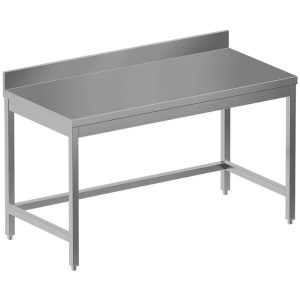
WORK TABLE + REAR UPSTAND TL1060D-SS6
380 € Product details
WORK TABLE + REAR UPSTAND TL1260D-SS6
422 € Product details
WORK TABLE + REAR UPSTAND TL1460D-SS6
464 € Product details
WORK TABLE + REAR UPSTAND TL1070D-SS8
375 € Product details
WORK TABLE + REAR UPSTAND TL1270D-SS8
410 € Product details
WORK TABLE + REAR UPSTAND TL1470D-SS8
450 € Product detailsStainless steel work tables for professional kitchens
Stainless steel work tables provide a solid and practical work surface for food preparation and processing in professional catering environments. They are used in restaurant and hotel kitchens, canteens, preparation areas, bakeries, butcher shops, catering operations and other foodservice establishments.
Different dimensions make it possible to select a work table according to the available space and specific workflow. Individual tables can be positioned against a wall or integrated with other stainless steel furniture to create a functional workstation.
Stainless steel work table according to its intended use
A stainless steel work table can be used for preparing ingredients, cutting, portioning, assembling dishes, plating before service or as a general working and preparation surface. In a professional kitchen, work tables can also help define separate work zones according to individual tasks and the type of food being handled.
A sufficiently large work surface makes organisation easier and keeps ingredients, containers and utensils within convenient reach of staff. The size of the table should therefore reflect not only the available kitchen space but also the volume of food being prepared and the workflow of the kitchen team.
Construction and work surface of stainless steel tables
Stainless steel work tables are designed for regular use in professional catering environments. A solid worktop and stable construction provide a suitable workstation for food preparation and other kitchen tasks.
Stability on the floor is also important. Height-adjustable feet on applicable models allow minor floor irregularities to be compensated for and the table to be levelled correctly, providing a stable work surface.
How to choose the right stainless steel work table
Choose a stainless steel work table primarily according to the width and depth of the available space, the required work surface and the tasks to be performed. When planning its position, sufficient clearance should be maintained for comfortable staff movement and safe handling of ingredients and kitchen equipment.
If the work table is to form part of a continuous kitchen line, the dimensions and position of adjacent elements should also be considered. A well-planned arrangement of work surfaces can reduce unnecessary staff movement and support an efficient kitchen workflow.
Frequently Asked Questions
What size stainless steel work table should I choose?
The appropriate dimensions depend on the available space and intended use. A larger work surface is useful when preparing larger quantities of ingredients, but sufficient clearance should always be maintained for safe movement around the workstation.
Where should a stainless steel work table be positioned?
The position should follow the workflow of the kitchen. A table can serve as an independent workstation or form part of a kitchen line. Ideally, it should be positioned close to the equipment and work zones most frequently used during food preparation.
Can several stainless steel work tables be positioned next to each other?
Yes. Several work tables can be positioned side by side to create a larger continuous work surface. Their dimensions and working height should be checked to ensure that the individual elements align correctly.
Can catering equipment be placed on a stainless steel work table?
This depends on the specific table and appliance. Before installation, check the dimensions and load capacity of the work table and follow the appliance manufacturer's requirements for stable positioning, ventilation, connections and service clearance.
Categories
- COMBI OVENS AND COOK & CHILL
- COOKING
- HOT SNACKS - PANINI - FAST FOOD
- FRYERS - GRILLS - BBQ
- CONVECTION OVENS – HIGH SPEED OVENS – MICROWAVE OVENS – CHARCOAL OVENS
- ASIAN COOKING
- DISH WASHERS
- LAUNDRY
- REFRIGERATION
- GASTRONORM REFRIGERATION
- PIZZA OVENS AND PIZZA/PASTA EQUIPMENT
- PASTRY - BAKERY - CHOCOLATE
- COFFEE - TEA - VIENNESE PASTRIES - JUICES - MILK SHAKE
- DINNER SERVICE - DISPLAYS - TROLLEYS
- SELF SERVICE-BUFFET-TAPAS-SUSHI
- ICE CREAM - SORBET - GRANITA
- DYNAMIC PREPARATION
- EXTRACTION - VENTILATION
- STAINLESS STEEL FURNITURE
- WORK TABLES
- SORTING TABLES WITH OPENING FOR WASTE
- WORK TABLES WITH UNDERSHELVES
- WORK TABLES WITH DRAWERS
- WORK TABLES WITH CLADDING
- WORK TABLES WITH CLADDING AND DRAWERS
- PASS-THROUGH WORK TABLES
- HOT CUPBOARD TABLES
- PASS-THROUGH HOT CUPBOARD TABLES
- 90° OPEN CORNER WORK TABLES
- 90° CORNER CUPBOARD TABLES
- 90° CORNER WALL CABINETS
- SINK TABLES WITH UNDERSHELF
- CENTRAL DOUBLE SINK TABLES
- SINK TABLES FOR DISHWASHERS
- SINK TABLES WITH SLIDING DOORS
- CHEF SINK TABLES
- MAXI SINK TABLES
- NEUTRAL CHEF SHELVES
- HEATING CHEF SELVES
- OPEN WALL CUPBOARDS
- WALL CUPBOARDS WITH SLIDING DOORS
- STAINLESS STEEL SHELVING
- MODULAR ALUMINUM SHELVING
- STAINLESS STEEL CABINETS WITH SLIDING DOORS
- STAINLESS STEEL BINS
- COMBINED SLOP SINK WITH UPPER SINK
- REFRIGERATED BAR COUNTERS WITH SINK
- STAINLESS STEEL WALL SHELVES
- FLOOR DRAINS
- CLEANING - HYGIENE
- RECEPTION - ROOM SERVICE - BREAKFAST
- GN CONTAINERS
- CLEANING PRODUCTS DIAMOND
- PRODUCTS DIVERSO BY DIAMOND
- NEW AT DIAMOND
- GASTRO MAXIMA
- NEZARADENE EN