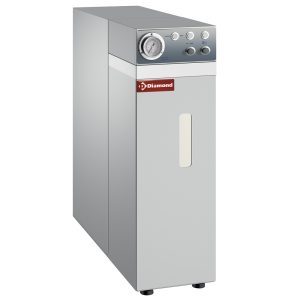
Reverse osmosis is a water treatment system designed for professional equipment where high water quality, reduced mineral deposits and a clean rinse result are important. It is particularly suitable for dishwashers, glasswashers, combi ovens and equipment using steam.
Reverse osmosis RS15/AT is a compact water treatment unit designed for catering operations where stable rinse quality and protection of technological equipment are important. The unit is recommended for dishwashers and glass washers equipped with a rinse pump or Break Tank system.
With expansion tank (5,5 Lit. at 3 bar), for all kind of machines. Productivity: 150L / h (water 15°C)...Reverse osmosis RS15/PP is a professional water treatment unit using reverse osmosis technology designed for catering operations.
Water treatment with reverse osmosis
Reverse osmosis treats incoming water through a membrane that significantly reduces dissolved minerals and other unwanted substances. The result is water with a low mineral content, helping to limit deposits inside connected equipment.
Cleaner rinsing results for dishes and glassware
In professional dishwashing and glasswashing, water quality can significantly affect the final rinse result. Reverse osmosis water helps reduce mineral marks and spots left after drying, which is particularly important for glassware and polished tableware.
Protection for water-connected equipment
Reverse osmosis systems can be used with dishwashers, glasswashers, combi ovens, steam equipment and other appliances where incoming water quality affects operation and mineral deposit formation. For dishwashers, the rinse system and technical requirements of the specific model should also be considered.
Reverse osmosis or a water softener?
Reverse osmosis and water softening are different methods of water treatment. The appropriate solution depends on incoming water quality, water hardness and the requirements of the connected equipment. More information about the differences and water treatment options is available in our article Water quality in gastronomy and its impact on catering equipment.
We use temporary cookies to improve the functionality of our website. To allow all settings, click "Accept all". You can also choose what kind of cookies you want to allow by clicking "Settings".
Cookie Policy