Water quality plays an important role in gastronomy, influencing dishwashing results, the reliable operation of equipment, and the overall service life of machines. Water used in professional kitchens often contains dissolved minerals, salts, and other substances that can gradually affect the performance of dishwashers, coffee machines, steam ovens, and other equipment.
The most common issue is water hardness, which is mainly caused by calcium and magnesium ions. When water is heated, these minerals precipitate and form limescale deposits on heating elements, inside boilers, pipes, spray arms, and other internal components. Over time this reduces heating efficiency, increases energy consumption, and may lead to technical problems or higher maintenance requirements.
Water Hardness and Limescale Formation
Water hardness varies depending on the geographic location and the local water supply system. In many regions the water is naturally hard and contains a higher concentration of dissolved minerals.
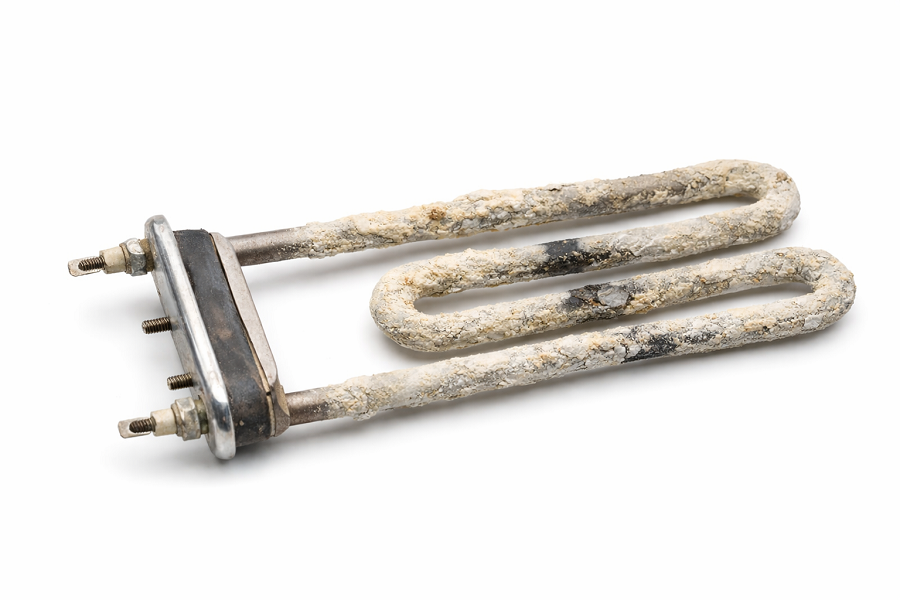
When hard water is repeatedly heated inside dishwashers, boilers, or steam-generating equipment, limescale gradually accumulates on heating surfaces and inside hydraulic circuits. Even a thin layer of limescale can significantly reduce heat transfer efficiency, meaning the equipment must consume more energy to reach the required temperature. Over time, this can lead to slower heating, unstable temperatures, increased wear of components, and higher operational costs.
For gastronomy operations, this often results in a gradual decrease in equipment performance and reliability.
Equipment Most Affected by Water Quality
Water quality affects a wide range of professional kitchen equipment, particularly devices that heat water, produce steam, or operate with a continuous water supply. This includes hood dishwashers, glasswashers, combi ovens, steam ovens, espresso coffee machines, and ice makers.
In dishwashers the impact of water quality is often visible in the final washing result. Mineral residues may cause stains, streaks, or cloudy glassware. In steam ovens and combi ovens limescale can accumulate inside boilers and steam generation systems, which gradually reduces efficiency and may require more frequent maintenance. Coffee machines and ice makers are also sensitive to mineral content, which can affect both the operation of the equipment and the quality of the final product.
Because these devices operate continuously in professional kitchens, controlling water quality is an important factor for stable operation and long-term reliability.
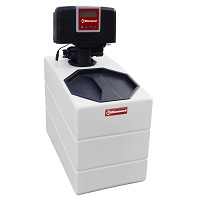
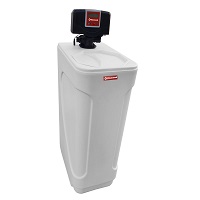
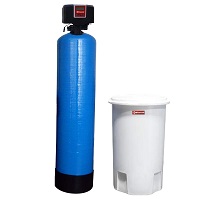
Water Softeners
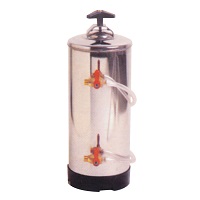
One of the most common solutions for reducing water hardness in gastronomy is the use of water softeners. These devices operate on the ion exchange principle, where calcium and magnesium ions responsible for water hardness are replaced with sodium ions that do not create limescale deposits during heating.
Softened water significantly reduces the formation of limescale inside equipment such as dishwashers, combi ovens, coffee machines, and other water-dependent appliances. This helps maintain stable operating conditions, improves washing performance, and extends the service life of heating components and hydraulic systems.
Water softeners require regular regeneration using salt, typically supplied in the form of tablet salt. During the regeneration cycle, the resin inside the softener is restored so that it can continue removing hardness minerals from the incoming water.
Reverse Osmosis
Reverse osmosis is a more advanced water treatment technology that removes not only hardness minerals but also a wide range of dissolved substances from water. The process forces water through a semi-permeable membrane that separates pure water from dissolved salts, minerals, and other contaminants.
Water produced by reverse osmosis contains very low levels of dissolved minerals and is therefore particularly suitable for equipment where the visual result of washing is important. In glasswashers and bar dishwashers, it significantly improves rinse results and reduces the formation of stains or mineral residues on glasses and cutlery.
The use of reverse osmosis can also reduce the need for manual polishing of glassware, although in many bars and restaurants glasses and cutlery are still polished before service as part of the final preparation and presentation.
Where Water Treatment Is Typically Used
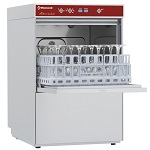
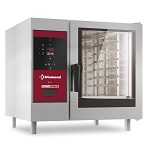
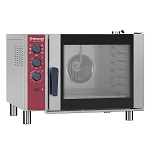
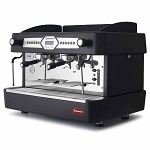
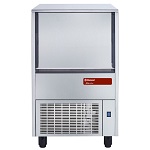
Water treatment in gastronomy is mainly used for equipment that heats water or produces steam, such as dishwashers, glasswashers, combi ovens, convection ovens, and coffee machines. It is also used for equipment where water quality directly influences the final product, for example ice makers.
How to Integrate Water Treatment in a Catering Operation
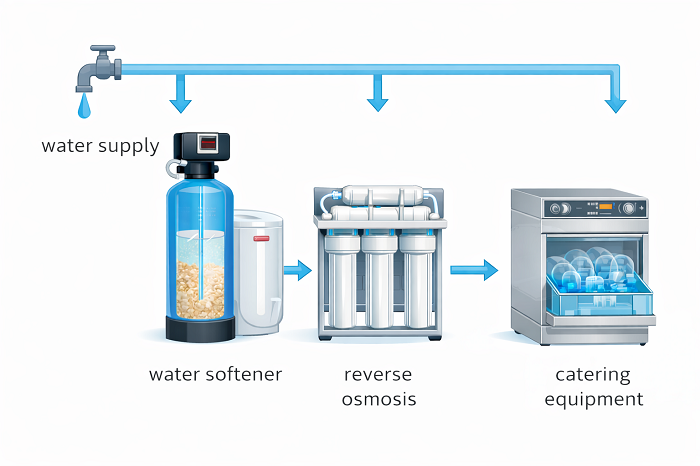
When water hardness is higher, several water treatment devices are often used in combination. A typical configuration may look as follows: water supply → water softener → reverse osmosis → catering equipment.
Such a setup helps maintain stable water quality and protects catering equipment from limescale formation.
Summary
Water quality is one of the key factors influencing the operation of professional gastronomy equipment. Hard water can gradually reduce performance, increase energy consumption, and shorten the service life of machines.
Many problems caused by hard water can be prevented through properly designed water treatment, the correct selection of a water softener or reverse osmosis system, and appropriate equipment settings.
Detergents and rinse aids also play an important role, helping to achieve stable and consistent washing results. For this reason, water quality should already be considered during the planning of kitchen technology and the layout of a catering operation.
Frequently Asked Questions About Water Quality in Gastronomy
How can water hardness be measured in a catering operation?
Water hardness can be measured using simple test strips, laboratory analysis, or data provided by the local water supplier. Hardness is usually expressed in degrees °dH or in mg/l CaCO₃. Service technicians often measure water hardness during the installation or maintenance of catering equipment.
Why do glasses sometimes appear cloudy after washing?
Cloudy glassware is usually caused by minerals present in the water. After rinsing and drying, these minerals may remain on the surface of the glass and create visible stains or a dull film. Proper water treatment and suitable rinse aids can significantly reduce this effect.
Is reverse osmosis always necessary for glasswashers?
Not always. In regions with lower water hardness, a water softener may be sufficient. Reverse osmosis is typically used in operations where a perfectly clear washing result is required, such as bars or establishments with high visual standards for glassware.
How often should salt be refilled in a water softener?
The frequency depends on the hardness of the incoming water, the capacity of the softener, and the volume of water consumption. In catering operations, it is recommended to check the salt container regularly, often every few days or at least once a week, to ensure proper regeneration of the resin and stable water-softening performance.