


DISH WASHERS
Professional dishwashers and glasswashers provide fast and hygienic washing of glasses, plates, cutlery, GN containers, pots and other kitchenware in restaurants, hotels, bars, cafés, canteens and other commercial catering operations.
The range includes bar glasswashers, undercounter dishwashers and glasswashers, hood-type dishwashers, pot washers and rack conveyor washing systems. The assortment is complemented by inlet and outlet tables, baskets, dosing systems, water softeners and water treatment equipment.


 Latest-generation machines with cutting-edge, eco-friendly technologies. Low energy, water and detergent consumption thanks to a smaller tank and its patented filter, which maintains the wash water at the correct temperature, as well as a high-efficiency (double-flow) wash pump.


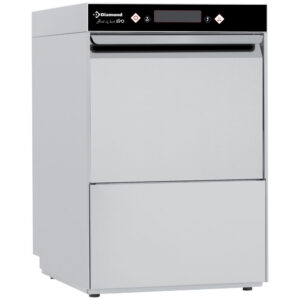



Professional dishwashers for commercial kitchens
Choosing the right professional dishwasher or glasswasher depends primarily on the type of items being washed, the volume during peak service and the required washing capacity. Smaller bars and cafés mainly use glasswashers and compact undercounter models, while restaurants and canteens with higher volumes can benefit from more powerful undercounter or hood-type dishwashers. Rack conveyor systems are designed for high-capacity operations, while dedicated pot washers are suitable for pots, GN containers and kitchen utensils.
Important parameters include the washing basket size and loading height. These determine the size of glasses, plates, trays, containers and kitchen utensils that can be washed. Operations handling large volumes of dishes should also consider the washing cycle duration and actual washing capacity of the machine.
The equipment of professional dishwashers is also important. Depending on the model, machines may be equipped with a drain pump, detergent and rinse-aid dispensers, built-in water softener, Break Tank system or additional hygiene and rinsing systems. The appropriate configuration should be selected according to the operating conditions and installation requirements.
Water quality affects washing results
When choosing a commercial dishwasher, the hardness and quality of the incoming water should not be overlooked. Hard water causes limescale deposits on internal components and can negatively affect washing results. In these conditions, a water softener or a machine with an integrated softener is recommended.
For glasswashing applications where a clean surface without spots or mineral deposits is particularly important, reverse osmosis can be used depending on the quality of the incoming water. Correct water treatment also helps protect the dishwasher and reduce limescale formation.
For more information on choosing the right machine, read our guide How to choose a dishwasher for your operation. Further information about water hardness, limescale and water treatment options can also be found in our article Water quality in gastronomy and its impact on catering equipment.