Asian cuisine ranks among the most dynamic culinary styles worldwide. It is defined by high-speed cooking, high temperatures, and precise control of heat output. For this reason, professional kitchens rely on specialized equipment that delivers the characteristic flavor, texture, and speed associated with Asian dishes.
Core technologies of Asian cooking include wok ranges, teppanyaki grills, dim sum steamers, noodle cookers, yakitori grills, and high-performance induction or gas ranges for large-volume cooking. Each unit is designed for a specific cooking technique, allowing consistent results even at high production pace.
Wok range
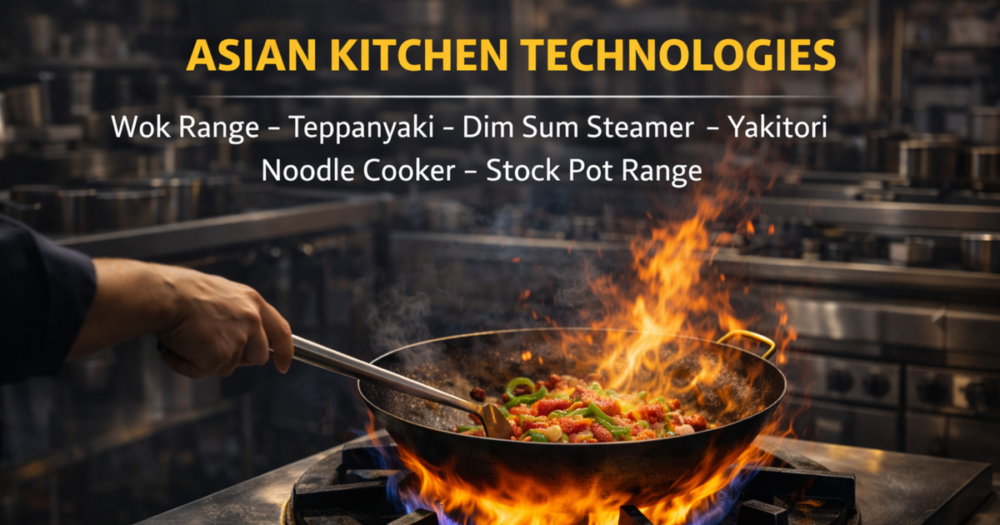
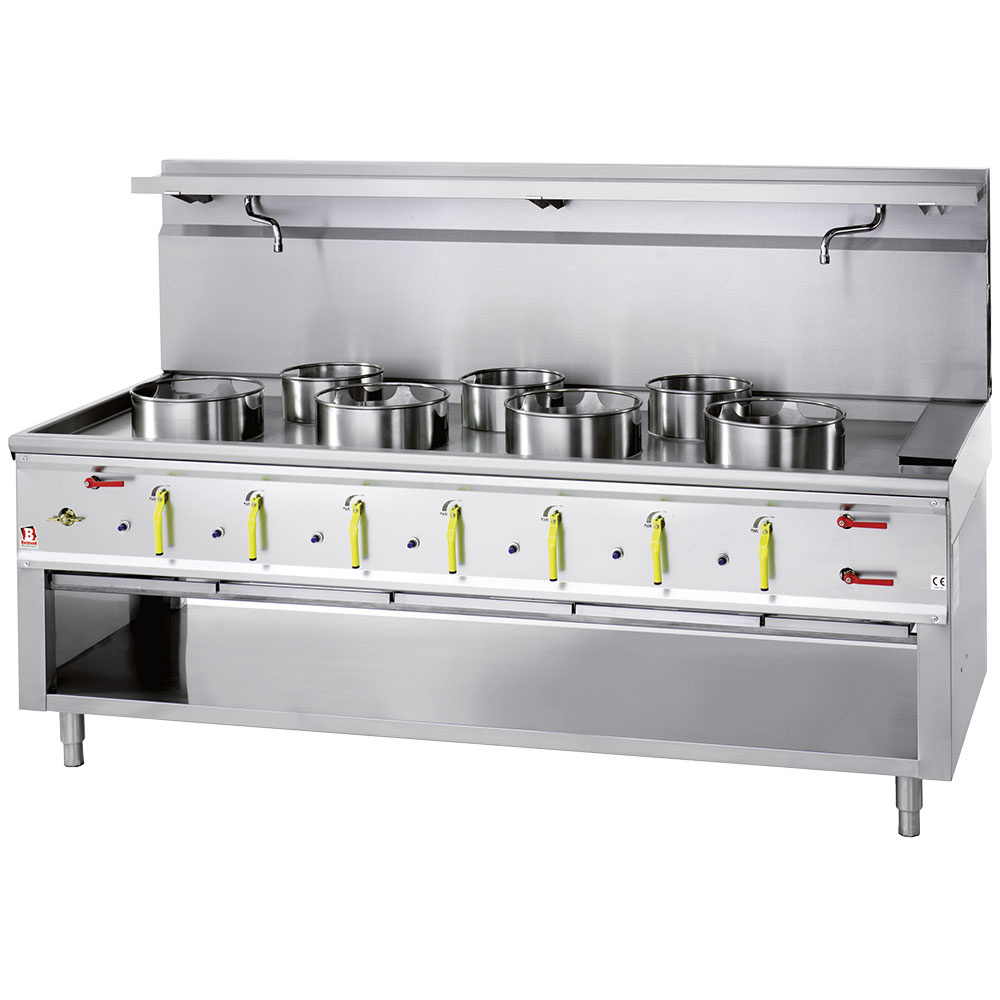
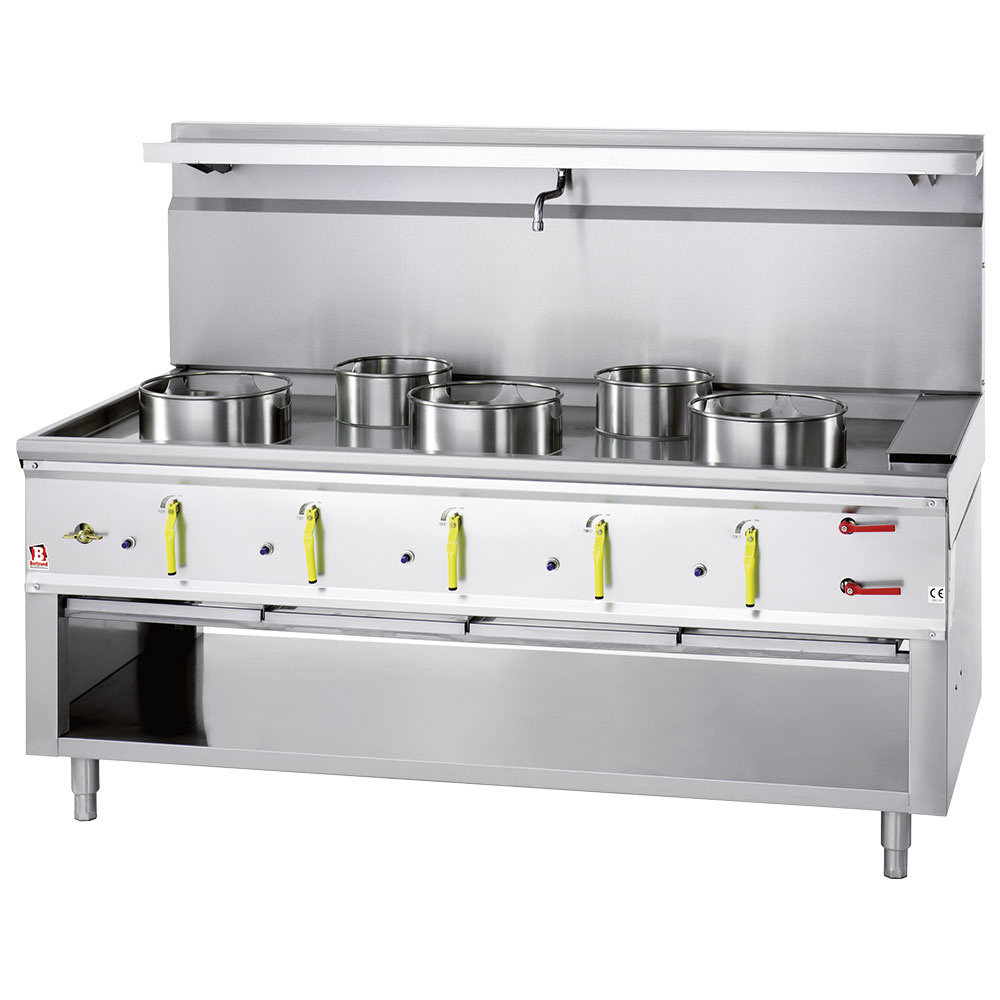
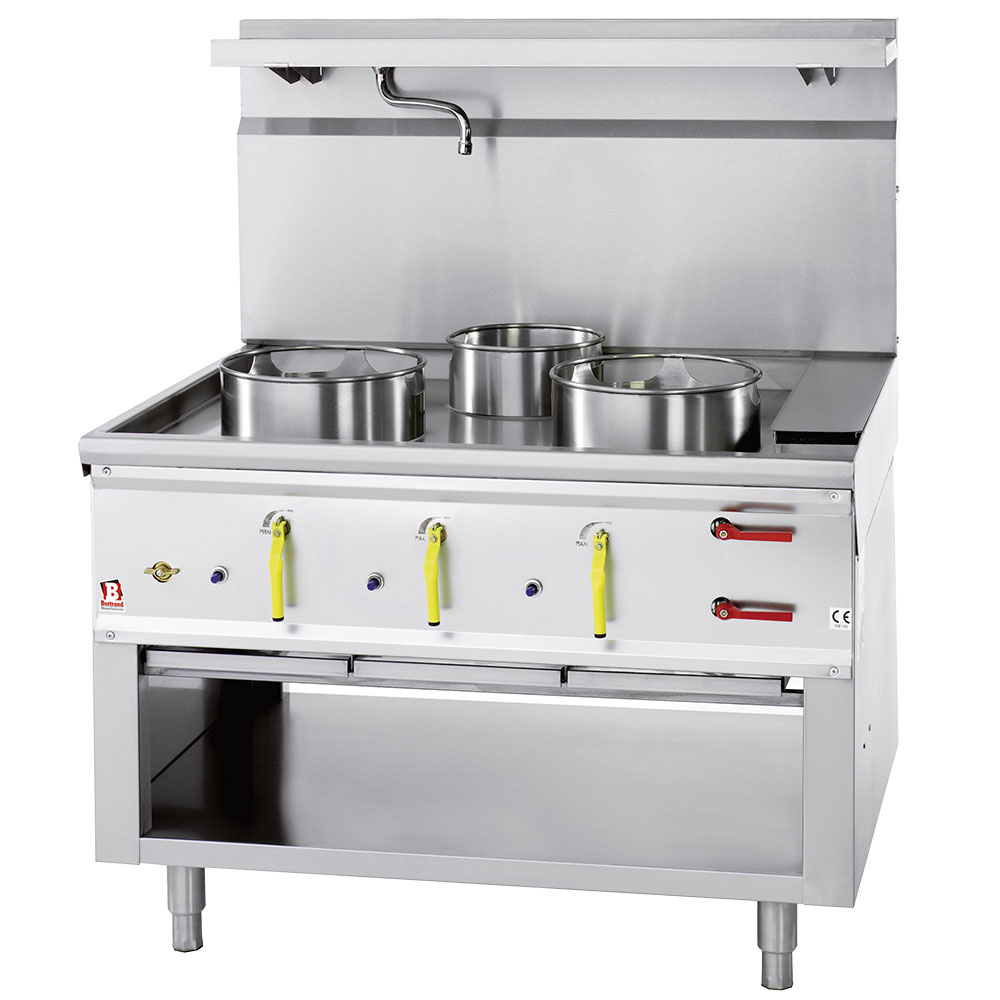
Wok ranges are among the most distinctive units in Asian kitchens, designed for cooking at extremely high temperatures. Burner design and wok ring concentrate the flame directly into the center of the pan, enabling rapid searing without loss of natural flavor and texture.
High burner output is essential for stir-fry, where meat, vegetables, or noodles are cooked quickly with continuous movement. This technique produces the characteristic aroma known as wok hei, a key element of authentic Asian cuisine. Wok ranges are widely used in Chinese, Thai, and Vietnamese operations, where fast production and consistent results are required. Units are typically equipped with high-performance gas burners, a robust wok ring, and often a water supply for rapid cooling of the pan or rinsing the work surface. In modern kitchens, wok ranges function as standalone workstations or as part of larger cooking suites, enabling simultaneous preparation of multiple dishes.
Induction wok ranges are increasingly used, offering immediate response to power adjustments and precise temperature control throughout the cooking process. Although a higher-cost solution, they provide improved energy efficiency, stable performance, and reduced heat load in the working environment.
Teppanyaki
Teppanyaki is a cooking technique typical of Japanese cuisine, where ingredients are prepared on a large, smooth steel griddle. Meat, fish, seafood, and vegetables are cooked at stable temperatures, enabling fast preparation without loss of juiciness.
Professional teppanyaki griddles use thick plates to ensure even heat distribution across the entire cooking surface. This allows simultaneous preparation of multiple ingredients without significant temperature drop. Units are available in electric or gas versions, depending on installation requirements and site conditions.
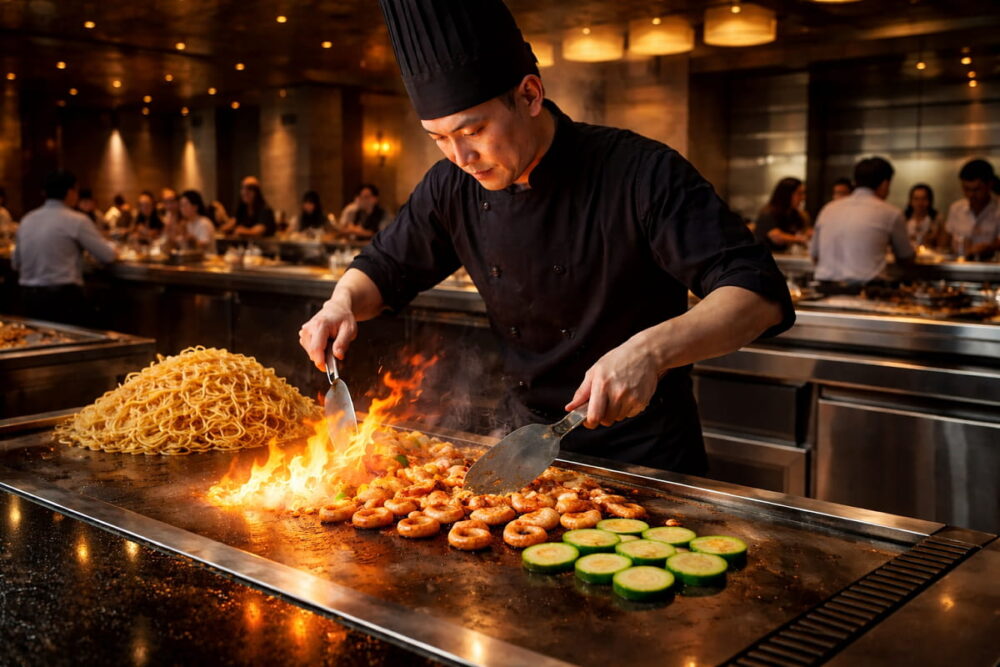
In many operations, teppanyaki is also used for show cooking, where dishes are prepared directly in front of guests. This approach enhances the dining experience and adds visual value to food preparation.
Dim sum steamers
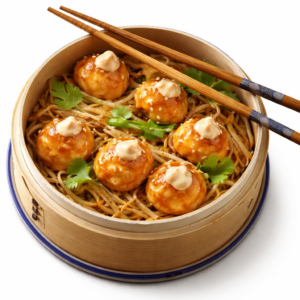
Steamers are essential equipment in many Asian kitchens. They are used for preparing dumplings, dim sum, vegetables, and fish using steam, which ensures even heating without direct contact with water. This method preserves the natural flavor and structure of the ingredients.
In traditional Asian cooking, bamboo steam baskets are commonly used, stacked above a steam source or placed on dedicated steamers. In professional operations, multi-tier steamers or stainless steel steam cabinets are used, allowing simultaneous preparation of multiple portions while maintaining consistent steam production.
Noodle cookers
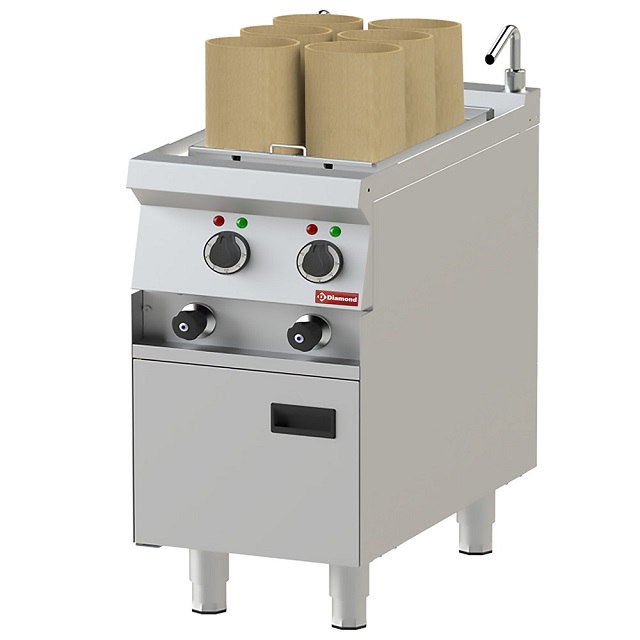
Noodle cookers are designed for high-output preparation of Asian noodle dishes such as ramen or pho. They operate with a continuous volume of boiling water, ensuring fast cooking and consistent results during peak service.
Multiple baskets allow parallel preparation of individual portions with precise timing control. Each portion is handled separately, supporting workflow efficiency and accuracy.
High-performance burners or heating elements ensure rapid recovery to boiling, even under continuous load. Stainless steel construction and integrated drainage simplify cleaning and daily operation.
Advanced models include automatic basket lifting, enabling precise control of cooking time and consistent results without manual intervention.
Yakitori grills – Skewer Grilling
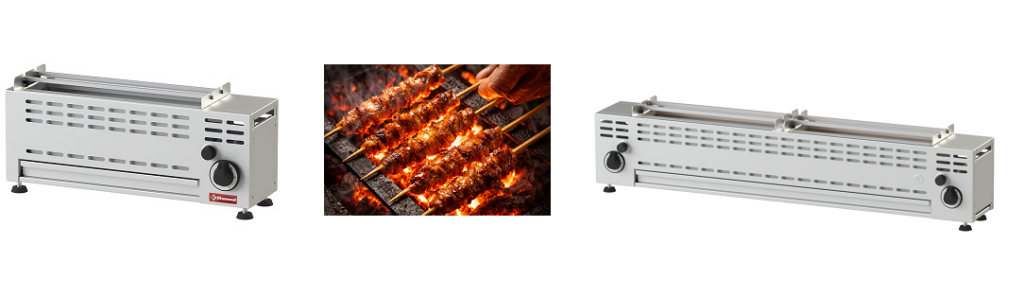
Yakitori grills are designed for preparing skewers of meat, fish, vegetables, or seafood over direct radiant heat. The term yakitori originates from Japanese and refers to grilled chicken, traditionally cooked on skewers over charcoal. Today, the same method is used for a wider range of ingredients.
Traditional yakitori grilling uses high-grade charcoal, typically binchotan, known for stable and intense radiant heat. Modern units also operate with gas burners and lava stones, which store and distribute heat evenly. This setup supports fast grilling, easy handling of skewers, and a characteristic grilled aroma.
A defining feature of yakitori grills is the narrow, elongated cooking surface, allowing skewers to be arranged in a single line. This layout originates from traditional street food setups, where all portions must remain visible and accessible during preparation. Concentrated radiant heat directly beneath the skewers ensures even grilling and efficient temperature control.
Stock pot range
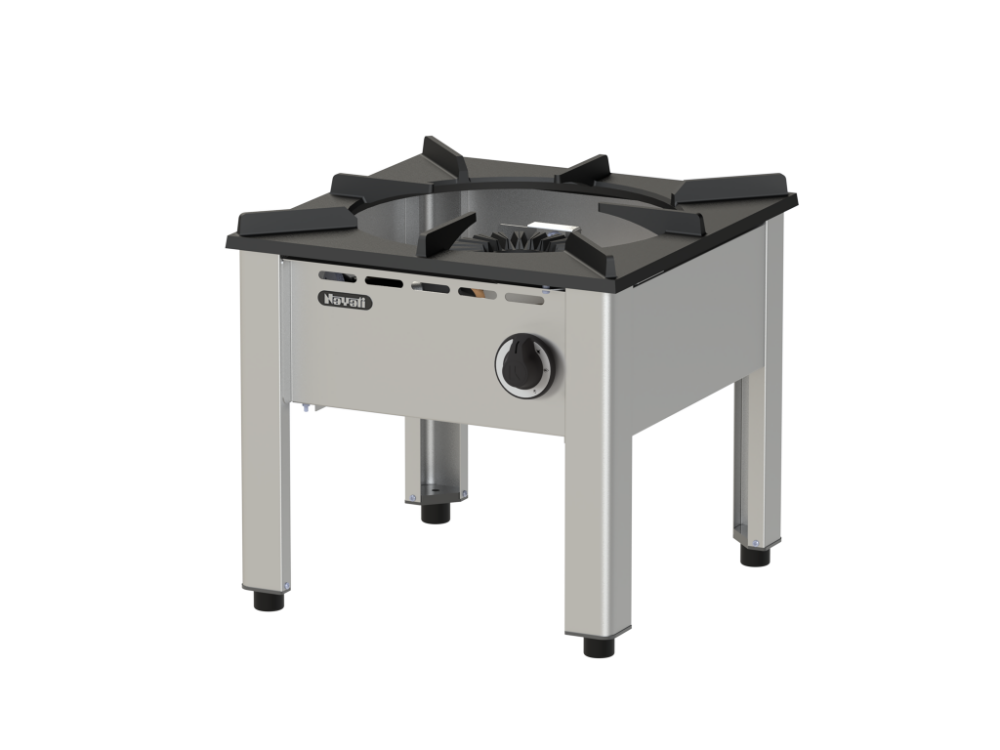
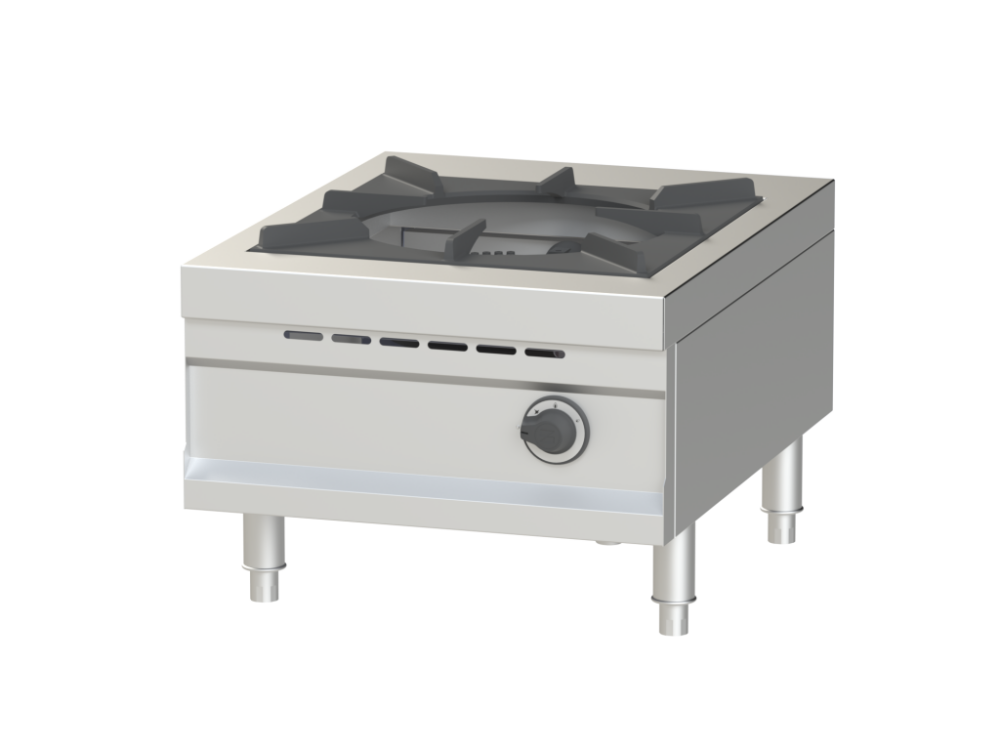
Stock pot cooker are designed for heating large pots used in the preparation of broths, soups, and high-volume liquid-based dishes. In Asian kitchens, they are essential for producing ramen, pho, and other noodle-based broths.
High-output gas burners provide rapid heating and maintain a stable boil even with large volumes. The robust structure supports heavy, high-capacity pots under continuous operation.
Units are used as standalone workstations or integrated into cooking lines. Stainless steel construction ensures durability, resistance to intensive use, and easy maintenance.
Show cooking
Show cooking is an integral part of many Asian dining formats, where food preparation takes place directly in front of guests. Rather than separating kitchen and service, cooking becomes a visible and continuous process.
Techniques such as wok stir-fry or teppanyaki require high heat, precise timing, and coordinated movement. Ingredients are handled rapidly, often in small batches, with immediate plating and service. This workflow supports both speed and consistency during peak operation.
The open cooking setup is commonly used in teppanyaki restaurants, ramen bars, and contemporary Asian concepts. It allows direct interaction between chef and guest while maintaining full control over the cooking process and product quality.
Conclusion
Asian cooking is defined by controlled techniques rather than complex procedures. The outcome depends on how ingredients are handled, not on lengthy preparation. High heat, short cooking times, and precise timing are central to the process.
The goal is to retain the natural properties of ingredients — texture, color, and flavor — while applying intense but controlled heat. This requires equipment that can deliver immediate power, fast response, and stable performance throughout service.
For this reason, Asian kitchens rely on purpose-built technologies. The difference is not only in recipes, but in the entire cooking approach, which is structured around speed, control, and consistency.