In professional foodservice operations, dirty dishes accumulate quickly. Pots, pans, gastronorm containers, plates, glasses and cutlery would require hours of manual washing, excessive water consumption and additional staff. A commercial dishwasher is therefore an essential part of every professional kitchen.
How do you choose a dishwasher that truly matches the needs of your operation?
In this practical guide, we explain the key criteria for selecting a commercial dishwasher and help you understand the differences between individual types.
Whether you operate a restaurant, bistro, hotel, café or institutional kitchen, the right dishwasher significantly improves workflow efficiency, reduces operating costs and ensures consistently high hygiene standards.
Glassware, Plateware and Pot & Pan Dishwashers
Glassware dishwashers are designed for gentle washing of glasses and delicate items. They operate with lower pressure and optimized cycles to prevent damage, scratching and clouding.
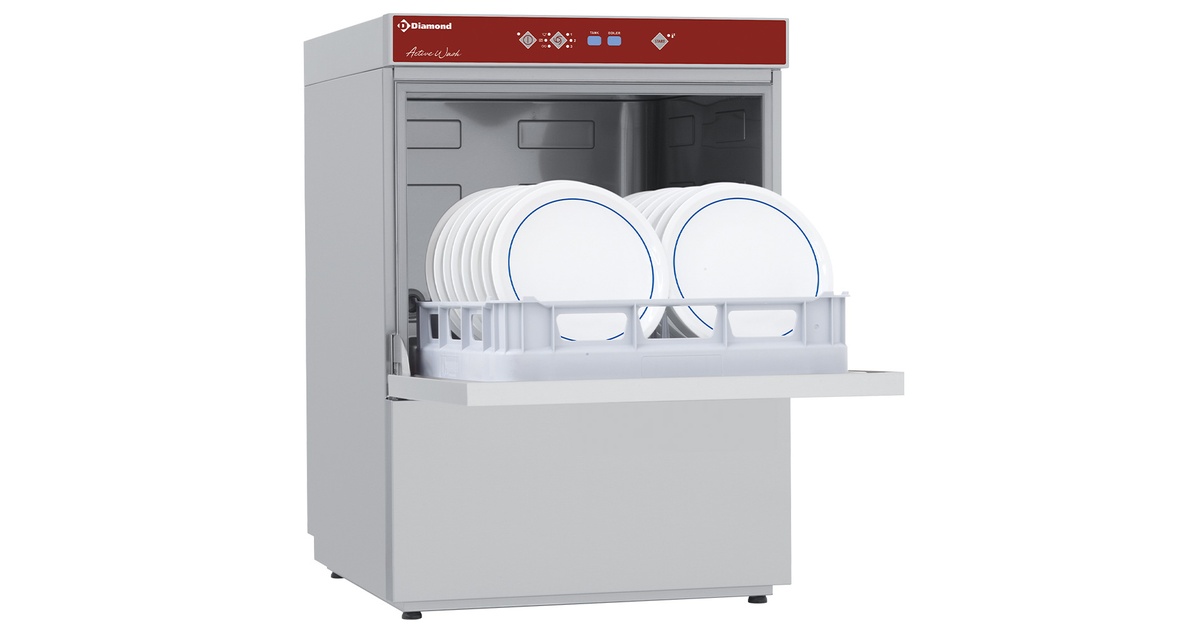
Dishwashers for plates and standard serving ware are intended for washing plates, bowls and everyday tableware. Compared to glassware machines, they work with higher temperatures and longer cycles to ensure a higher level of hygiene.
Pot and pan dishwashers are designed for washing cookware, GN containers and heavily soiled kitchen equipment. They feature higher power output, robust construction and powerful washing arms. Specialized racks are used depending on the type of items being washed.
Classification by capacity and functionality
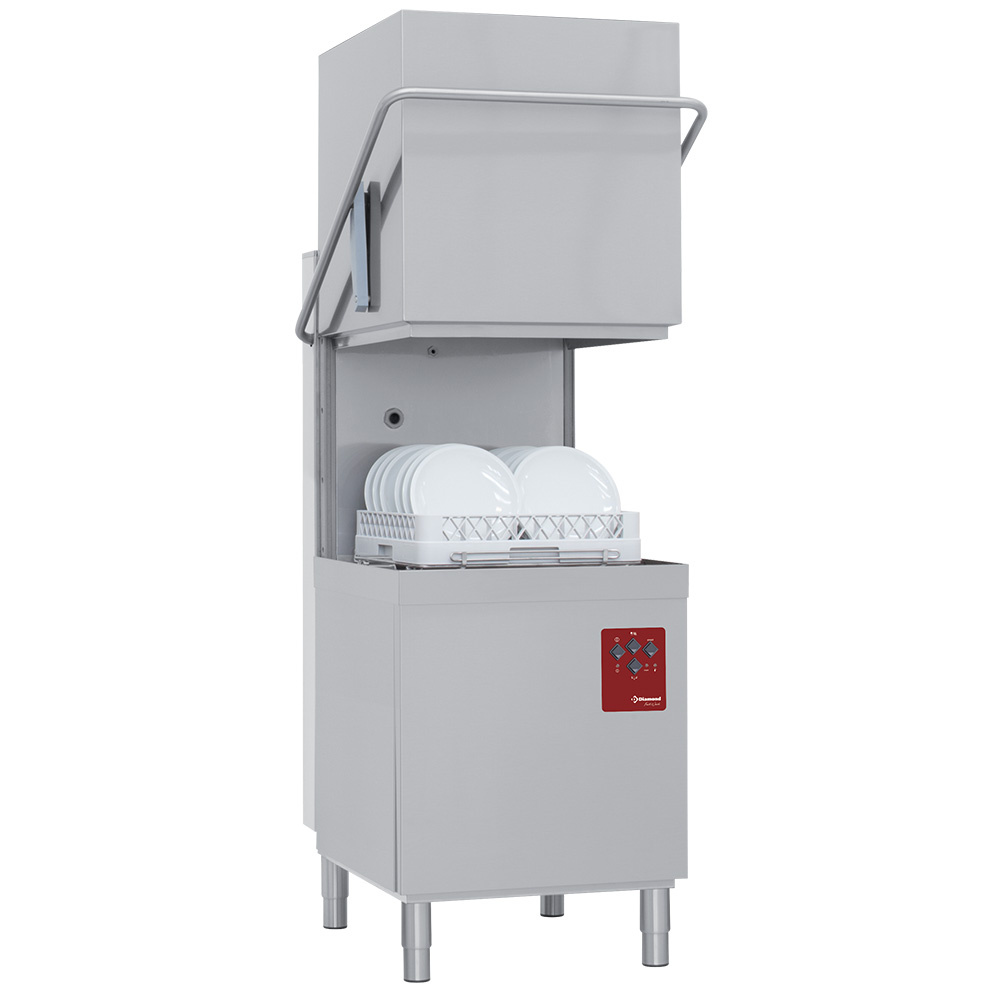
According to capacity and operating principle, commercial dishwashers can be divided into undercounter dishwashers, dishwashers for plates and glassware, pass-through dishwashers, black ware dishwashers and rack conveyor tunnel dishwashers.
Clicking on the images will take you to the relevant categories
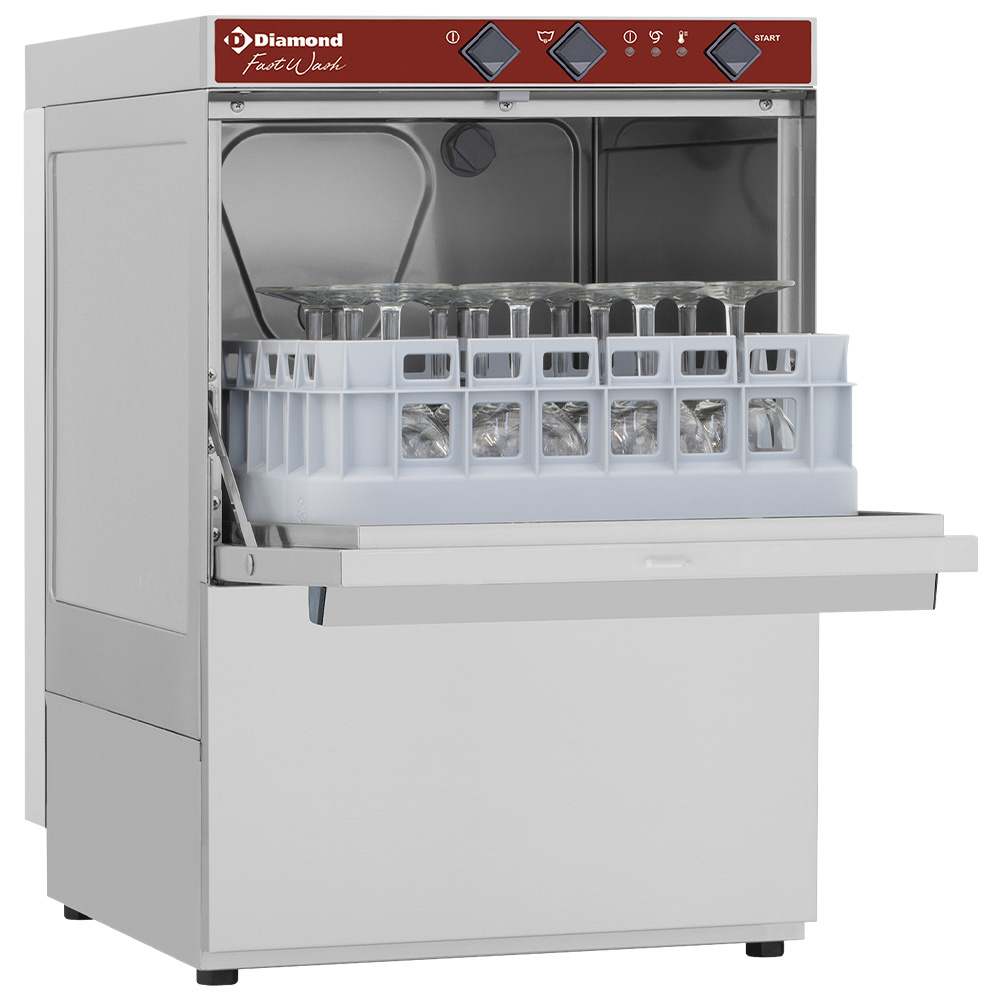
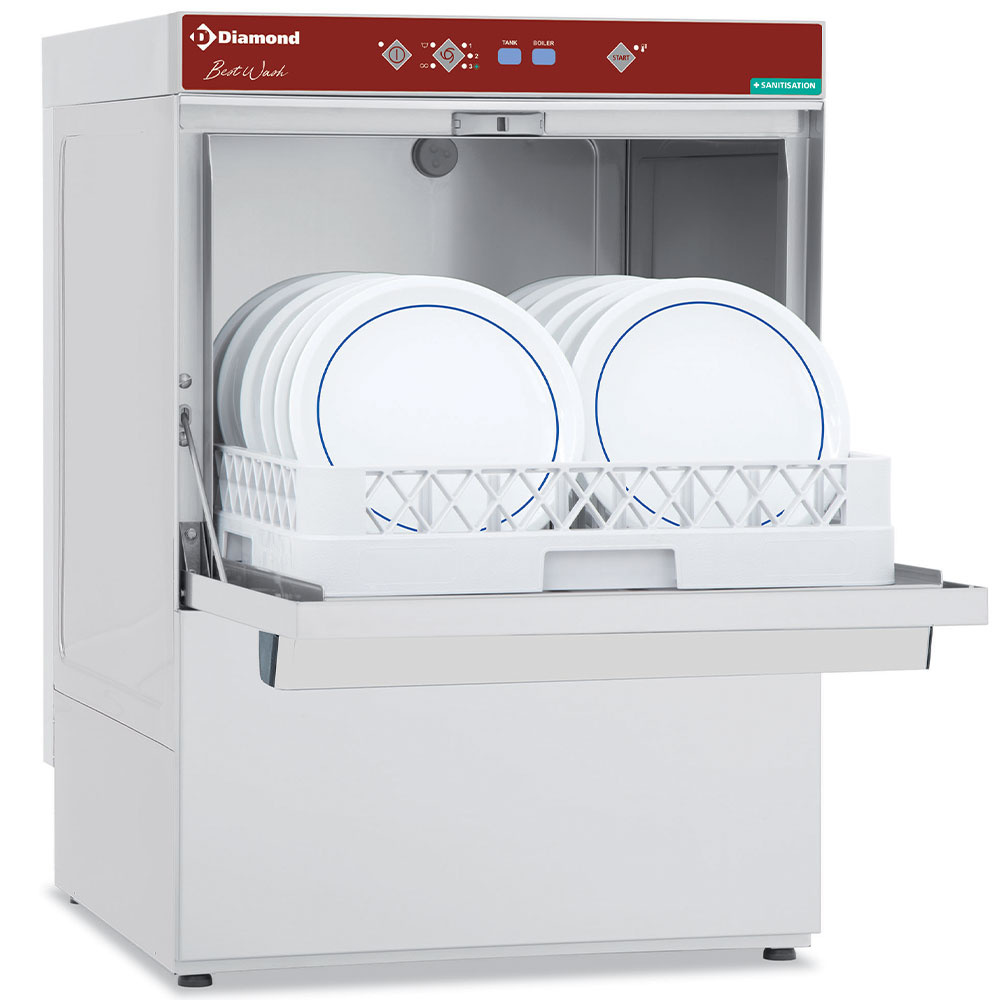
Undercounter dishwashers and classic plate and glassware dishwashers represent a standard solution for small and medium-sized operations. The operator inserts the rack, starts the program and after a short cycle the dishes are ready for reuse.
Hood dishwashers are designed for operations with higher washing volumes. Racks with dimensions of 500 × 500 mm or 600 × 500 mm are inserted at working table height, and the machine is often supplemented with inlet and outlet tables. Rack movement is manual, while the washing process itself is automatic.
The highest capacity and continuous washing of dishes is provided by rack conveyor tunnel dishwashers. Washing takes place in standard racks that are automatically transported through the machine by a conveyor system. This type of dishwasher is ideal for large-scale kitchens with continuous dish flow.
Rack conveyor dishwashers operate on the principle of transporting racks through washing zones. The conveyor is adapted to a specific type of ware, and the configuration of inlet and outlet tables can be adjusted to the kitchen layout.
When a quality dishwasher is not enough
Even a technically advanced dishwasher alone does not guarantee perfect results. Washing performance is significantly influenced by the correct choice of detergents and water quality.
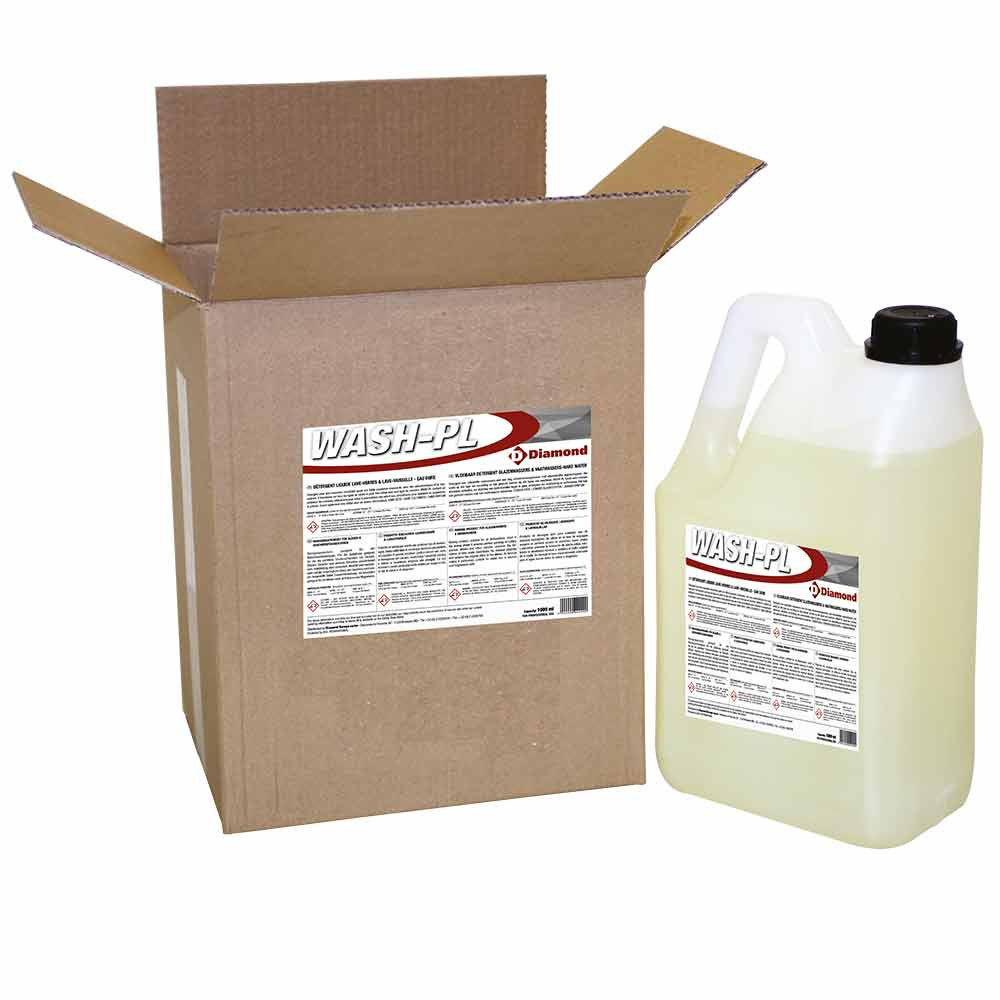
Improper chemical dosing can lead to residue buildup, stains or hygiene issues. Diamond detergents and rinse aids are formulated for commercial dishwashers to help achieve stable washing results and consistent hygiene.
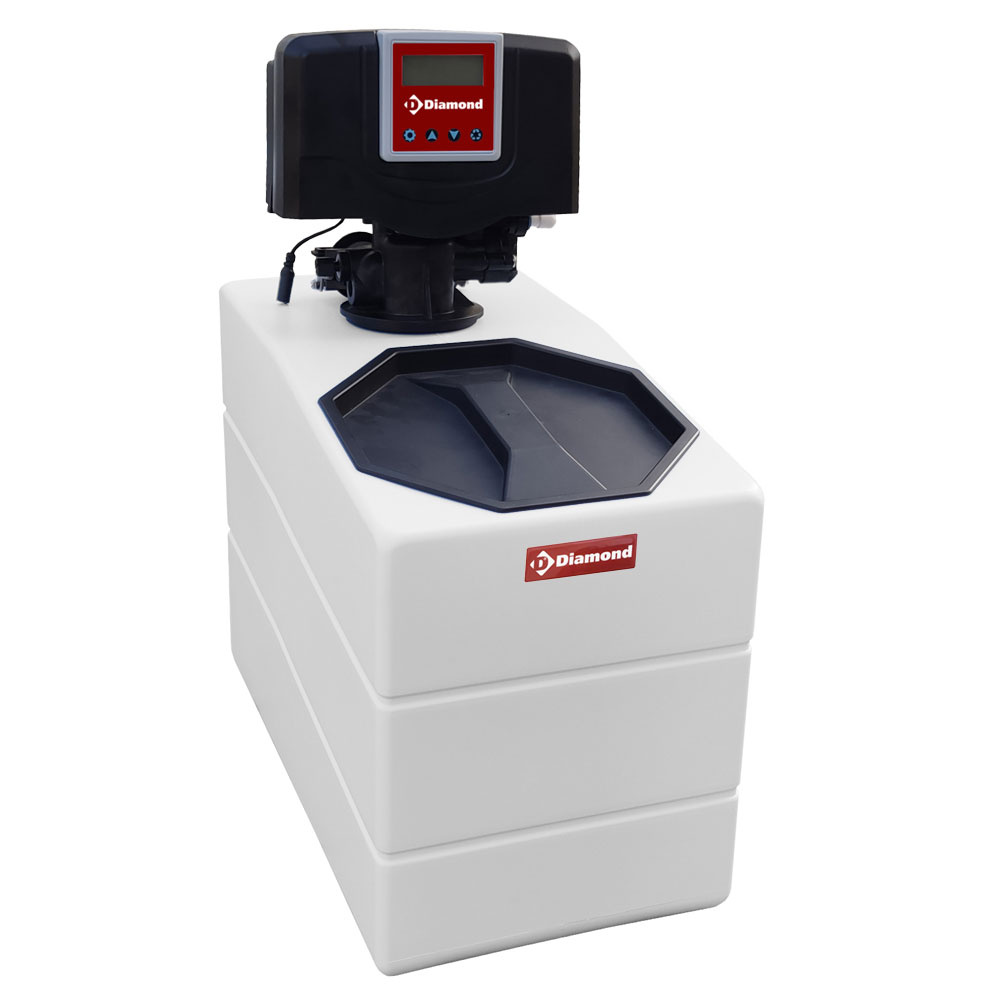
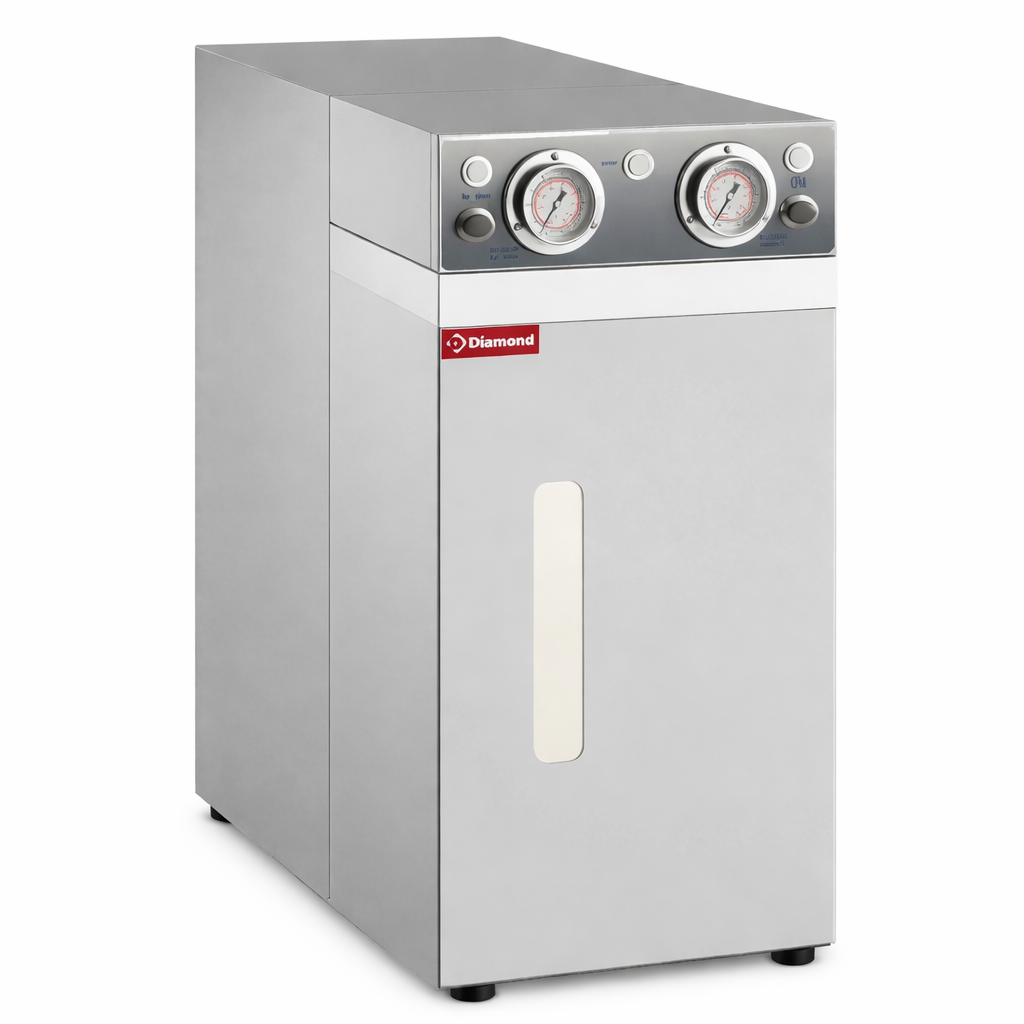
Water quality plays an equally important role. Hard water promotes scale formation, increases energy consumption and shortens the lifespan of the machine. The use of water softeners reduces hardness and limits mineral deposits. In more demanding operations, reverse osmosis systems are used.
Reverse osmosis ensures spotless rinsing and streak-free drying of dishes, which is especially important when washing glassware and cutlery.
Clicking on the images will take you to the relevant categories
Dishwashers with extended equipment
Some Diamond dishwashers are supplied with extended equipment as standard.
These may include built-in water softeners, drain pumps and automatic detergent dosing systems. Selected models are also equipped with a break tank system, which prevents backflow of water into the supply network. During the rinsing phase, the pump ensures stable pressure, final rinsing temperatures of approximately 85 °C and a hygienically safe result.
It should be taken into account that higher equipment levels also mean higher initial investment. On basic models, many components can be added externally according to the specific needs of the operation.
The service life of a commercial dishwasher is significantly influenced by regular maintenance, filter cleaning and water quality control. Proper care is the foundation for long-term reliable operation.